Section 2: Resistance to contaminants Introduction
Introduction
2.1
A wide range of solid, liquid and gaseous contaminants can arise on sites, especially those that have had a previous industrial use (see paragraph 0.12 for the definition of a contaminant). In particular, the burial of biodegradable waste in landfills can give rise to landfill gas (see paragraph 2.25). Sites with a generally rural use such as agriculture or forestry may be contaminated by pesticides, fertiliser, fuel and oils and decaying matter of biological origin.
2.2
Table 2 lists examples of sites that are likely to contain contaminants. It is derived from the ‘Industry Profile’ guides produced by the former Department of the Environment (DoE), each of which deals with a different industry with the potential to cause contamination29. Each profile identifies contaminants which may be associated with the industry, areas on the site in which they may be found and possible routes for migration.
2.3
In addition, there can be problems of natural contaminants in certain parts of the country as a result of the underlying geology. In this instance the contaminants can be naturally occurring heavy metals (e.g. cadmium and arsenic) originating in mining areas, and gases (e.g. methane and carbon dioxide) originating in coal mining areas and from organic rich soils and sediments such as peat and river silts. The Environment Agency has produced two guidance documents31,32 on this subject which discuss the geographical extent of these contaminants, the associated hazards, methods of site investigation and protective measures.
2.4
Natural contaminants also include the radioactive gas radon, although the specific approach for assessing and managing the risks it poses is different from other contaminants (see paragraphs 2.39 and 2.40).
2.5
Sulphate attack affecting concrete floor slabs and oversite concrete associated with particular strata also needs to be considered. Principal areas of sulphate bearing strata in England and Wales are shown in Diagram 1 and Table 1. BRE Special Digest SD133 provides guidance on investigation, concrete specification and design to mitigate the effects of sulphate attack.
Table 2 Examples of sites likely to contain contaminants
| Animal and animal products processing works |
| Asbestos works |
| Ceramics, cement and asphalt manufacturing works |
| Chemical works |
| Dockyards and dockland |
| Engineering works (including aircraft manufacturing, railway engineering works, shipyards, electrical and electronic equipment manufacturing works) |
| Gas works, coal carbonisation plants and ancillary by-product works |
| Industries making or using wood preservatives |
| Landfill and other waste disposal sites |
| Metal mines, smelters, foundries, steel works and metal finishing works |
| Munitions production and testing sites |
| Oil storage and distribution sites |
| Paper and printing works |
| Power stations |
| Railway land, especially larger sidings and depots |
| Road vehicle fuelling, service and repair: garages and filling stations |
| Scrap yards |
| Sewage works, sewage farms and sludge disposal sites |
| Tanneries |
| Textile works and dye works |
| Note: the above list is not exhaustive |
29 Department of the Environment Industry Profiles, 1996.
31 Environment Agency R & D Technical Report P291 Information on land quality in England: Sources of information (including background contaminants).
32 Environment Agency R & D Technical Report P292 Information on land quality in Wales: Sources of information (including background contaminants).
33 BRE Special Digest SD1 Concrete in aggressive ground, 2003.
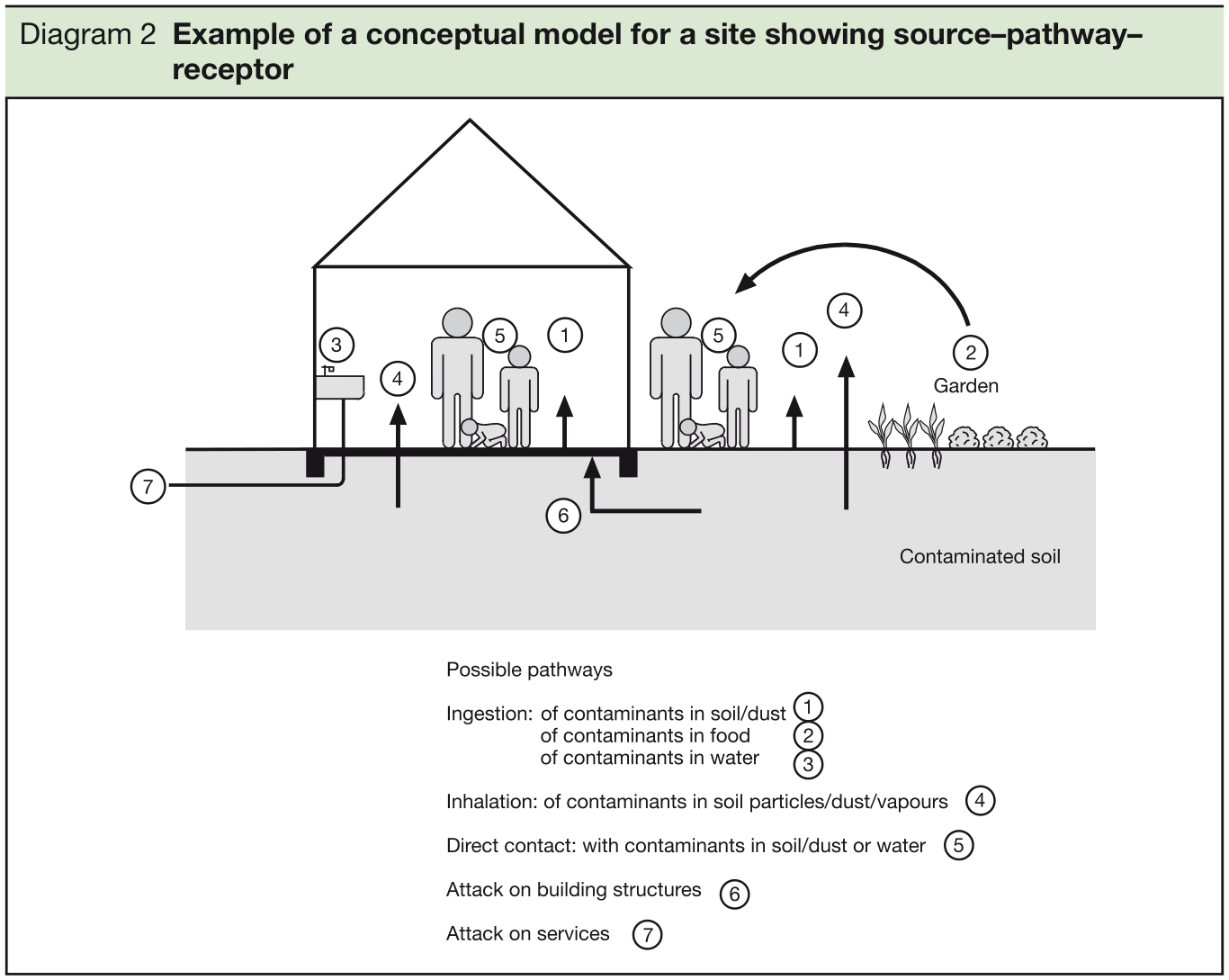
Diagram 2 Example of a conceptual model for a site showing source–pathway– receptor