Mechanical ventilation and air-conditioning systems Ventilation ducts and flues passing through fire-separating elements

Ventilation ducts and flues passing through fire-separating elements

General provisions

10.12

If air handling ducts pass through fire-separating elements, the fire performance of the elements should be maintained using one or more of the following four methods. In most ductwork systems, a combination of the four methods is best.

a. Method 1 – thermally activated fire dampers.
b. Method 2 – fire resisting enclosures.
c. Method 3 – protection using fire resisting ductwork.
d. Method 4 – automatically activated fire and smoke dampers triggered by smoke detectors.

10.13

Further information on fire resisting ductwork is given in the ASFP Blue Book.

Kitchen extract

10.14

Methods 1 and 4 should not be used for extract ductwork serving kitchens. The likely build-up of grease within the duct can adversely affect dampers.

Ducts passing through protected escape routes

10.15

Method 1 should not be used for extract ductwork passing through the enclosures of protected escape routes (Diagrams 10.2 and 10.3), as large volumes of smoke can pass thermal devices without triggering them.

10.16

An ES classified fire and smoke damper which is activated by a suitable fire detection system (method 4) may also be used for protected escape routes.

Diagram 10.2 Ductwork passing through protected escape routes – method 2 or method 3
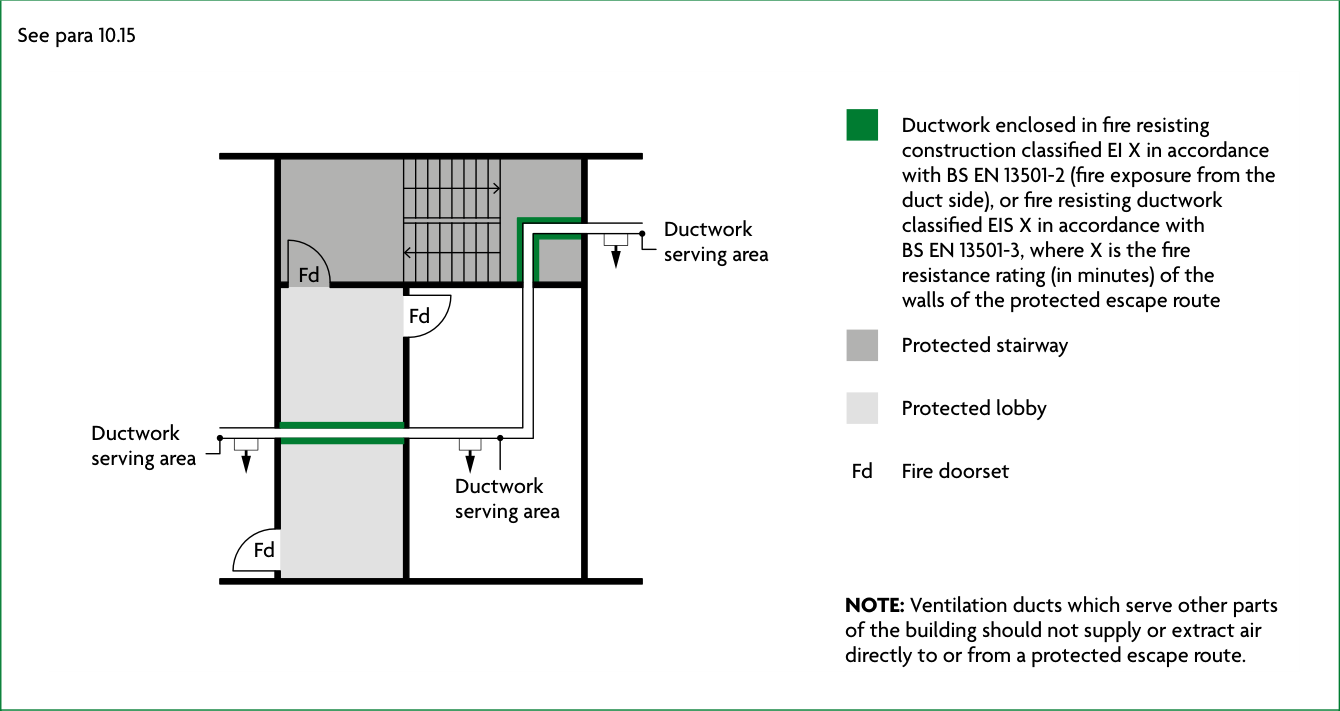
Diagram 10.2 Ductwork passing through protected escape routes – method 2 or method 3. Wording on the drawing: See para 10.15; Ductwork enclosed in fire resisting construction classified EI X in accordance with BS EN 13501-2 (fire exposure from the duct side), or fire resisting ductwork classified EIS X in accordance with BS EN 13501-3, where X is the fire resistance rating (in minutes) of the walls of the protected escape route; Ductwork serving area; Fd; Fd; Protected stairway; Protected lobby; Ductwork serving area; Fd; Fire doorset; Ductwork serving area; Fd; NOTE: Ventilation ducts which serve other parts of the building should not supply or extract air directly to or from a protected escape route.
Diagram 10.2 Ductwork passing through protected escape routes – method 2 or method 3

Diagram 10.3 Ductwork passing through protected escape routes – method 4
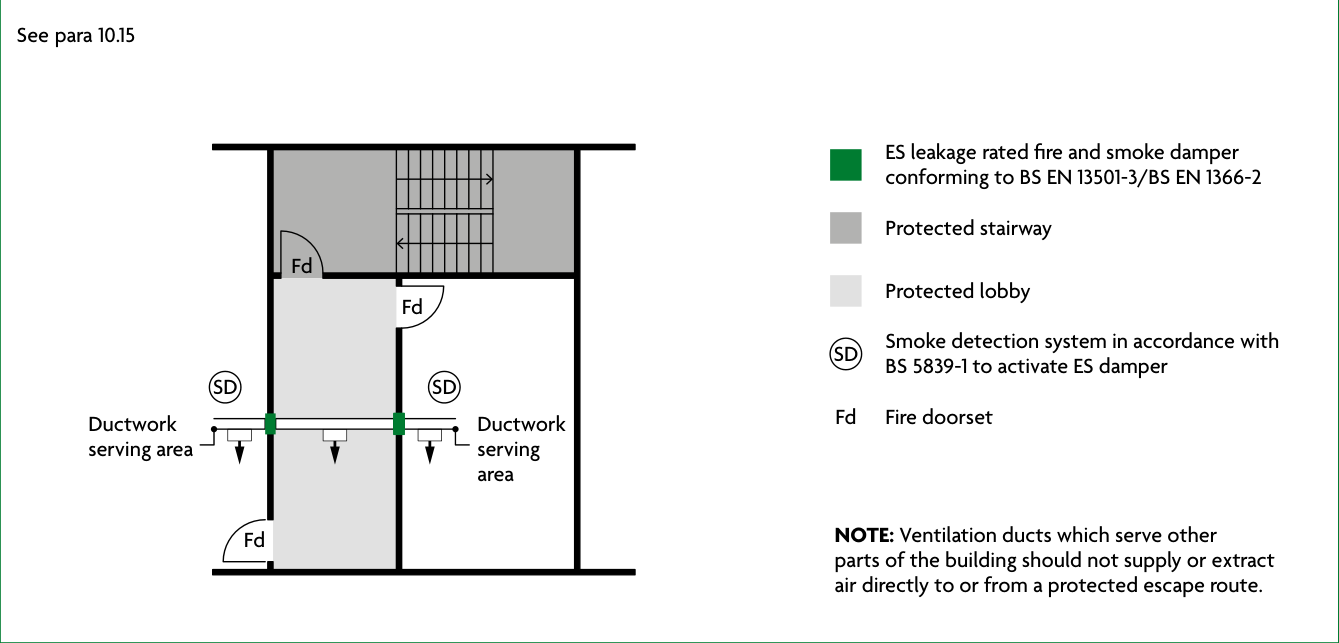
Diagram 10.3 Ductwork passing through protected escape routes – method 4. Wording on the drawing: See para 10.15; ES leakage rated fire and smoke damper conforming to BS EN 13501-3/BS EN 1366-2; Protected stairway; Fd; Protected lobby; Fd; SD SD; Smoke detection system in accordance with BS 5839-1 to activate ES damper; SD; Fd Fire doorset Ductwork serving area; Ductwork serving area; NOTE: Ventilation ducts which serve other parts of the building should not supply or extract air directly to or from a protected escape route.; Fd
Diagram 10.3 Ductwork passing through protected escape routes – method 4

View this page on RegsUK