Openings for pipes Alternative C: Sleeving
Alternative C: Sleeving
10.5
A pipe with a maximum nominal internal diameter of 160mm may be used with a sleeve made out of a high melting point metal, as shown in Diagram 10.1, if the pipe is made of one of the following.
a. Lead.
b. Aluminium.
c. Aluminium alloy.
d. Fibre-cement.
e. uPVC (pipes should also comply with either BS 4514 or BS 5255).
A high melting point metal means any metal (such as cast iron, copper or steel) which, if exposed to a temperature of 800°C, will not soften or fracture to the extent that flame or hot gas will pass through the wall of the pipe.
Diagram 10.1 Pipes penetrating fire-separating elements
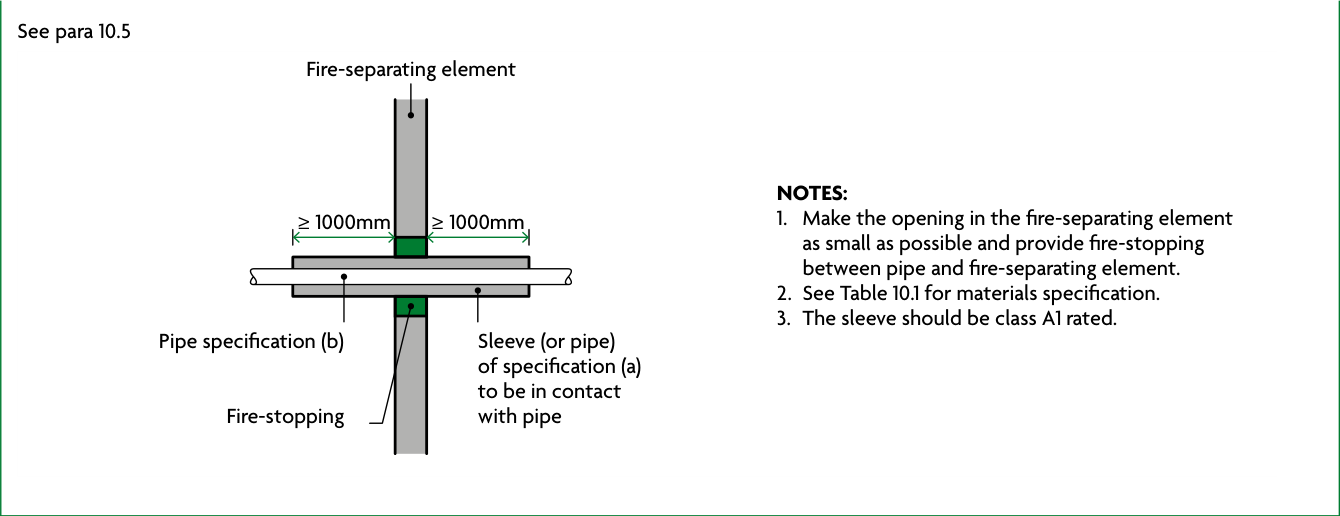
Table 10.1 Maximum nominal internal diameter of pipes passing through a fire-separating element
| Situation | Pipe material and maximum nominal internal diameter (mm) | ||
|---|---|---|---|
(a) High melting point metal(1) | (b) Lead, aluminium, aluminium alloy, uPVC(2), fibrecement | (c) Any other material | |
1. Structure (but not a wall separating buildings) enclosing a protected shaft that is not a stairway or a lift shaft | 160 | 110 | 40 |
2. Any other situation | 160 | 40 | 40 |
NOTES:
1. Any metal (such as cast iron, copper or steel) which, if exposed to a temperature of 800°C, will not soften or fracture to the extent that flame or hot gas will pass through the wall of the pipe.
2. uPVC pipes that comply with either BS 4514 or BS 5255.