Section 10: Protection of openings and fire-stopping Openings for pipes
Openings for pipes
10.2
Pipes passing through a fire-separating element, unless in a protected shaft, should comply with one of the alternatives A, B or C below.
Alternative A: Proprietary seals (any pipe diameter)
10.3
Provide a proprietary, tested sealing system that will maintain the fire resistance of the wall, floor or cavity barrier.
Alternative B: Pipes with a restricted diameter
10.4
Where a proprietary sealing system is not used, fire-stop around the pipe, keeping the opening for the pipe as small as possible. The nominal internal diameter of the pipe should not exceed the relevant dimension given in Table 10.1.
Alternative C: Sleeving
10.5
A pipe with a maximum nominal internal diameter of 160mm may be used with a sleeve made out of a high melting point metal, as shown in Diagram 10.1, if the pipe is made of one of the following.
A high melting point metal means any metal (such as cast iron, copper or steel) which, if exposed to a temperature of 800°C, will not soften or fracture to the extent that flame or hot gas will pass through the wall of the pipe.
Diagram 10.1 Pipes penetrating fire-separating elements
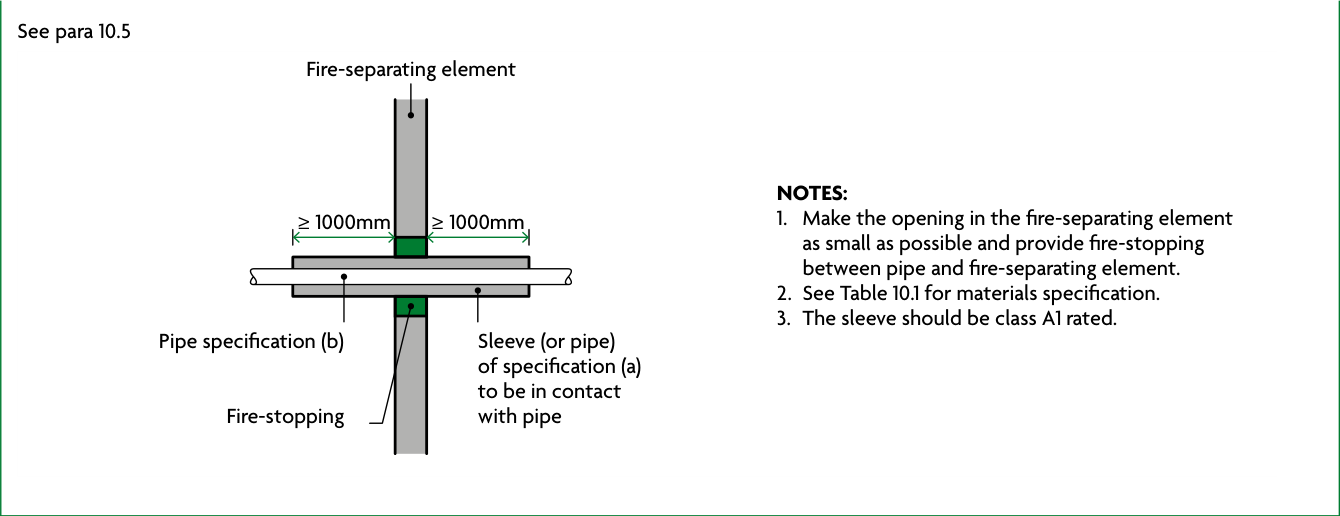
Table 10.1 Maximum nominal internal diameter of pipes passing through a fire-separating element
| Situation | Pipe material and maximum nominal internal diameter (mm) | ||
|---|---|---|---|
(a) High melting point metal(1) | (b) Lead, aluminium, aluminium alloy, uPVC(2), fibrecement | (c) Any other material | |
1. Structure (but not a wall separating buildings) enclosing a protected shaft that is not a stairway or a lift shaft | 160 | 110 | 40 |
2. Any other situation | 160 | 40 | 40 |
NOTES: