Escape route design Single escape routes and exits
Single escape routes and exits
2.6
A single escape route is acceptable for either of the following.
a. Parts of a floor from which a storey exit can be reached within the limit for travel distance in one direction shown in Table 2.1 (see also paragraph 2.8), provided the following apply.
i. For places of assembly and bars, no one room in this situation has more than 60 people.
ii. For ‘residential (institutional)’ buildings (purpose group 2(a)), no one room in this situation has more than 30 people. Occupant number calculations are described in Appendix D.
b. A storey with no more than 60 people, where the limits on travel distance in one direction only are satisfied (see Table 2.1).
2.7
In many cases, the beginning of a route will not have an alternative escape route (for example, a single exit from a room into a corridor where escape is possible in two directions). This is acceptable if both of the following apply.
a. The travel distance to the nearest storey exit is within the limits for routes where escape is possible in more than one direction (Table 2.1).
b. The travel distance for the ‘one direction only’ section of the route does not exceed the limit for travel distance where there is no alternative escape route (Table 2.1).
Diagram 2.1 shows how to measure travel distances from a dead end in an open storey layout.
Diagram 2.1 Travel distance in dead-end condition
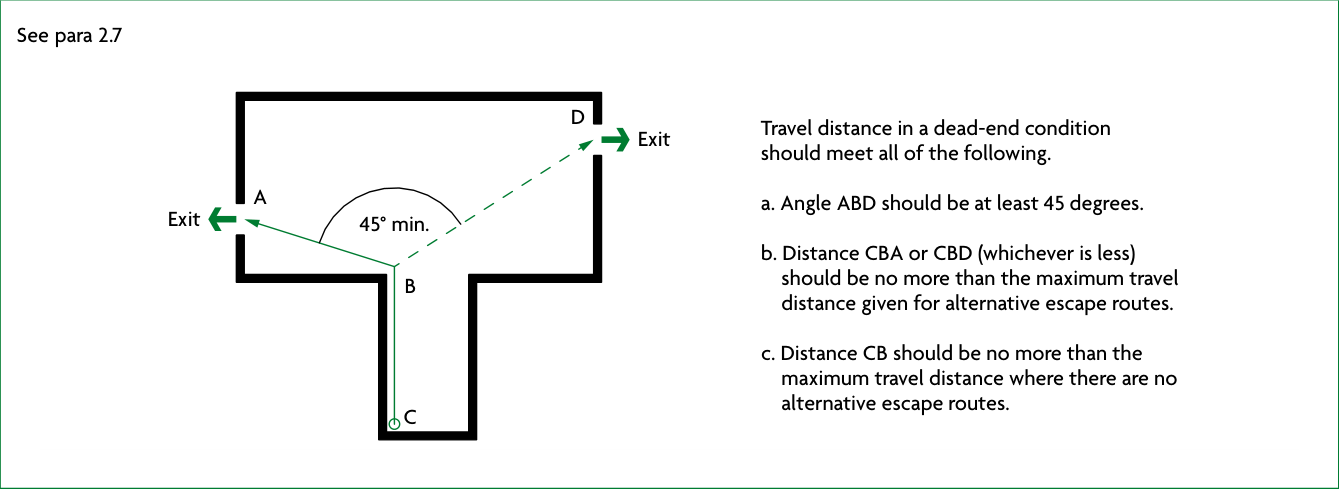
Table 2.1 Limitations on travel distance
| Maximum travel distance(1) where travel is possible in: | ||||
|---|---|---|---|---|
| Purpose group | Use of the premises or part of the premises | One direction only (m) | More than one direction (m) | |
| 2(a) | Residential (institutional) | 9 | 18 | |
| 2(b) | Residential (other): | |||
a. in bedrooms(2) | 9 | 18 | ||
b. in bedroom corridors | 9 | 35 | ||
c. elsewhere | 18 | 35 | ||
| 3 | Office | 18 | 45 | |
| 4 | Shop and commercial | 18 | 45 | |
| 5 | Assembly and recreation: | |||
a. buildings primarily for disabled people | 9 | 18 | ||
b. areas with seating in rows | 15 | 32 | ||
c. elsewhere | 18 | 45 | ||
| 6 | Industrial(3) | Normal hazard | 25 | 45 |
| Higher hazard | 12 | 25 | ||
| 7 | Storage and other non-residential(3) | Normal hazard | 25 | 45 |
| Higher hazard | 12 | 25 | ||
| 2–7 | Place of special fire hazard(4) | 9(5) | 18(5) | |
| 2–7 | Plant room or roof-top plant: | |||
a. distance within the room | 9 | 35 | ||
b. escape route not in open air (overall travel distance) | 18 | 45 | ||
c. escape route in open air (overall travel distance) | 60 | 100 | ||
NOTES:
1. If the internal layout of partitions, fittings, etc. is not known, direct distances, rather than travel distances, should be assessed. The direct distance should be assumed to be two-thirds of the actual travel distance.
2. Maximum part of travel distance within the room. This limit applies within the bedroom and any associated dressing room, bathroom or sitting room, etc. The distance is measured to the door to the protected corridor that serves the room or suite. Sub-item (b) applies from that point along the bedroom corridor to a storey exit.
3. In industrial and storage buildings, the appropriate travel distance depends on the level of fire hazard associated with the processes and materials being used.
Higher hazard includes manufacturing, processing or storage of significant amounts of hazardous goods or materials, including any of the following.
• Any compressed, liquefied or dissolved gas.
• Any substance that becomes dangerous by interaction with either air or water.
• Any liquid substance with a flash point below 65°C, including whisky or other alcoholic liquor.
• Any corrosive substance.
• Any oxidising agent.
• Any substance liable to spontaneous combustion.
• Any substance that changes or decomposes readily, giving out heat when doing so.
• Any solid substance with a flash point less than 120°C.
• Any substance that is likely to spread fire by flowing from one part of a building to another.
4. Places of special fire hazard are listed in the definitions in Appendix A.
5. Maximum part of travel distance within the room/area. Travel distance outside the room/area should comply with the limits for the purpose group of the building or part.